
GLA’s project wins the First Prize in the Special Category of the China Architectural Design Award.
Release Date:
2019-06-21
2018

The winners of the 2018 China Architectural Design Award have been announced, with GLA’s project—the Inventronics LED Driver Production Base—awarded the First Prize in the Industrial Architecture Category.
The “China Architectural Design Award” is the highest national honor in the field of architectural design, approved by the State Council’s Office for Evaluation of Scientific and Technological Achievements and organized by the Architectural Society of China. Held every two years, the award recognizes architects, engineers, and educators who have achieved outstanding accomplishments in architectural practice.
The award jury was composed of experts and scholars, including numerous academicians of the Chinese Academy of Engineering, convened by the Organizing Committee of the Architectural Society of China. GLA ultimately competed against more than a hundred of the most influential design firms nationwide and, alongside such renowned top-tier domestic institutions as the China Academy of Architectural Design, the Tsinghua University Architectural Design & Research Institute, the South China University of Technology Architectural Design Institute, and the School of Architecture at the Central Academy of Fine Arts, was awarded first prize in each of the specialized categories.
Award-winning works:
The production base for Inventronics LED drivers is nestled amidst the picturesque landscapes of Fuchun, as depicted in Huang Gongwang’s “Dwelling in the Fuchun Mountains.” The site stretches linearly along National Highway 320, occupying what was once a suburban village and farmland. Outside the red-line boundary, a neatly organized industrial park is under construction; within the site, by contrast, undeveloped fish ponds, tea hills, and other remnants of agrarian culture retain a modest, almost primal character. This duality of site conditions—between large-scale industrial production and an organic natural environment—creates a stark juxtaposition, prompting a design approach that explores the dialectical interplay of emergence and dissolution.
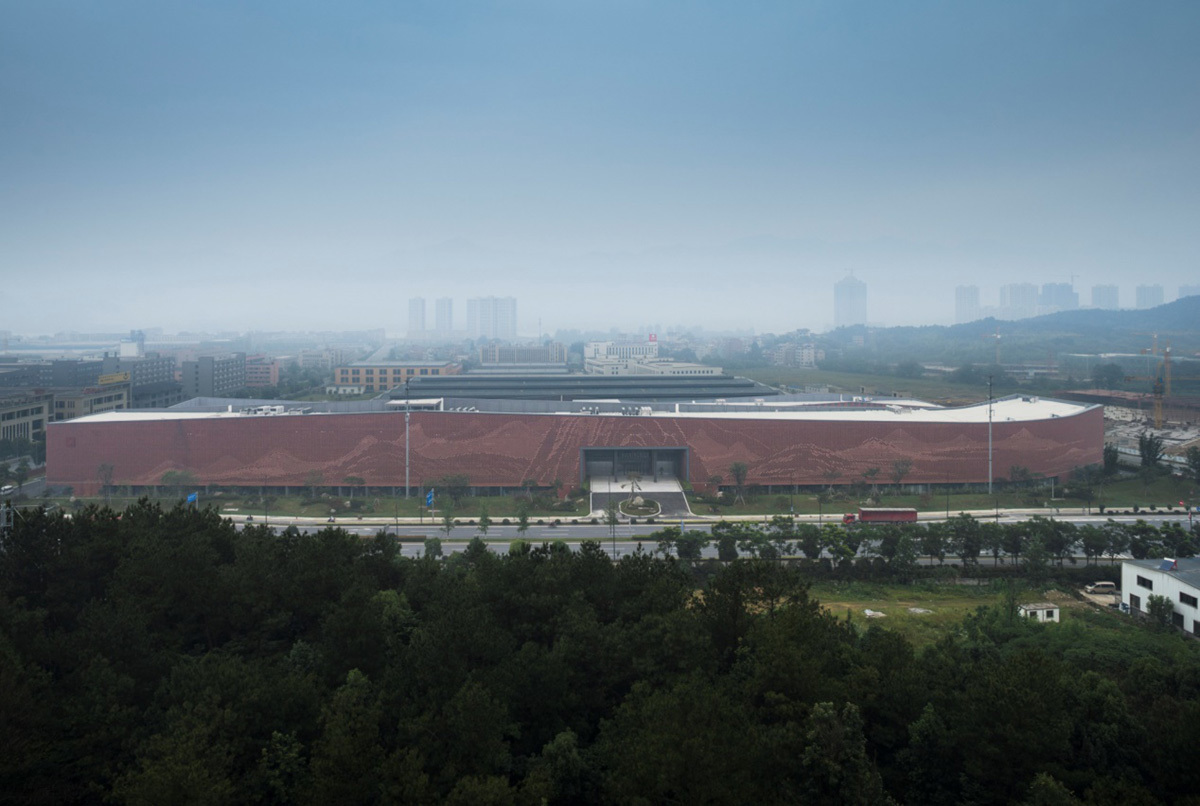
Photography: Architectural Translator Yao Li
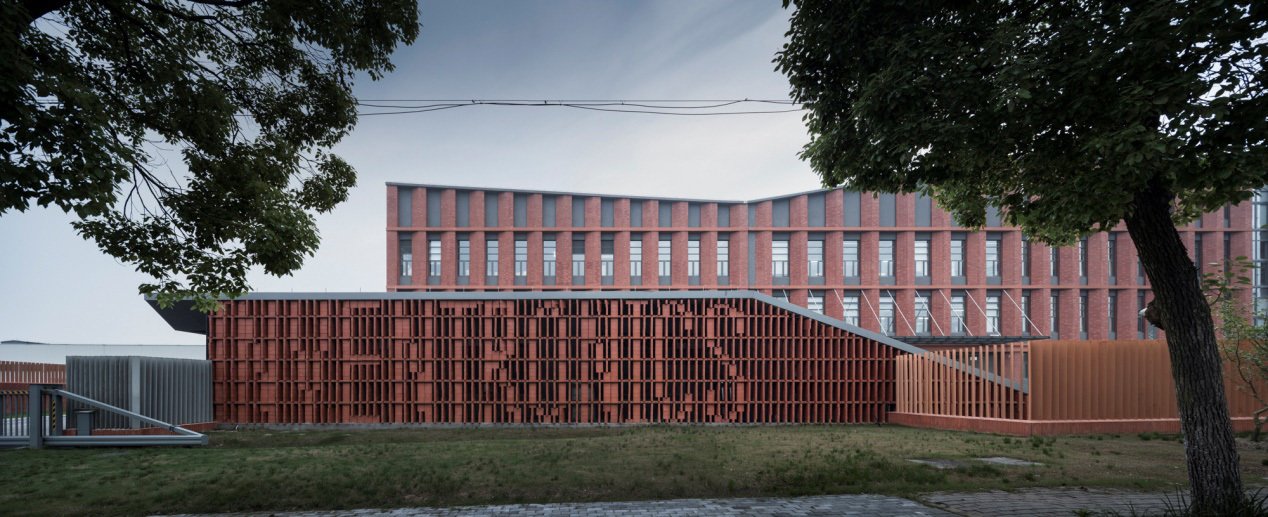
Photography: Architectural Translator Yao Li
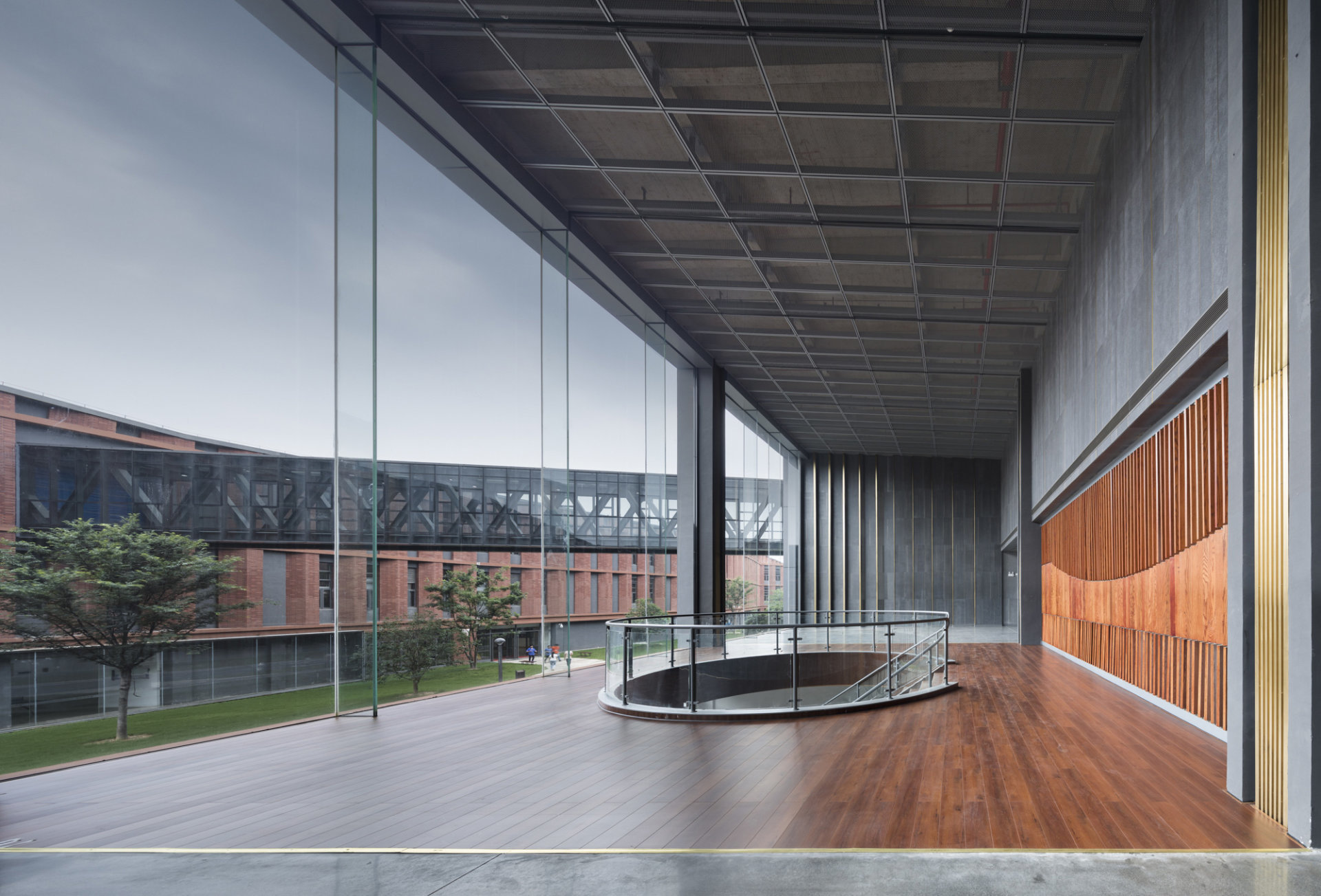
Photography: Architectural Translator Yao Li